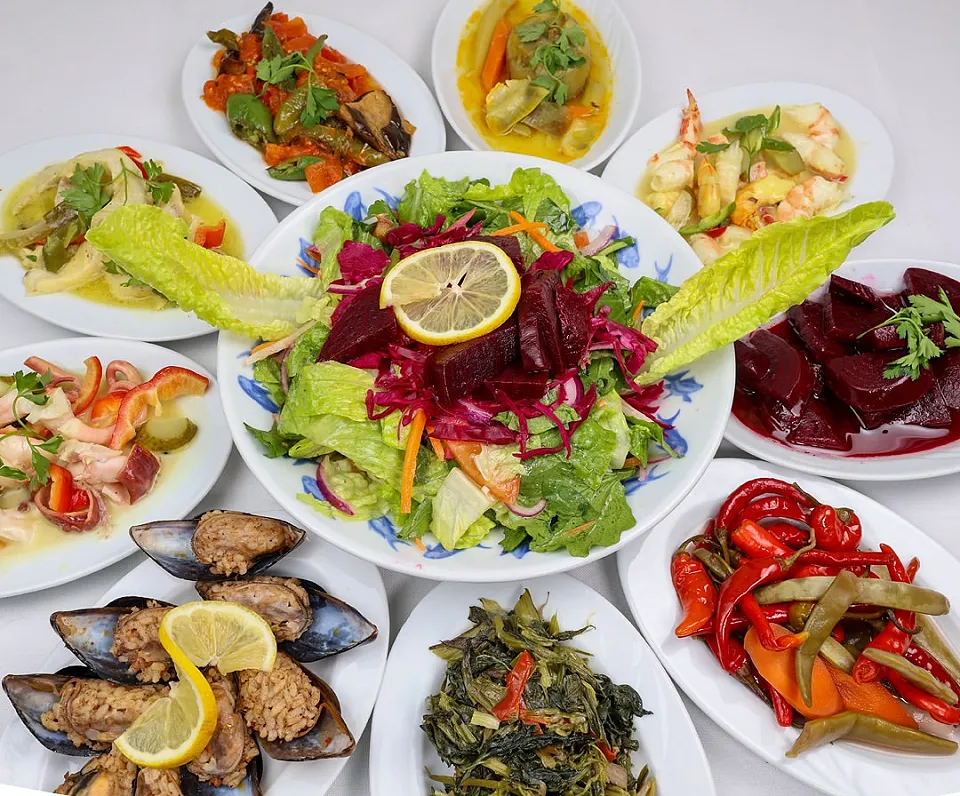
A raki-and-fish table moves from cold to hot: first white cheese and cold meze, then hot starters, and the fish last. Raki usually goes into the glass first, then water, with ice added last. Nobody hurries — the table unfolds slowly, with conversation.
Not just a meal, but an evening
The short answer to how to set a rakı-balık (rakı and fish) table is this: from cold to hot, from light to rich. The long answer unfolds plate by plate over the course of an evening. At this table, dishes arrive one after another, glasses are filled without haste, and conversation comes before everything else.
On the Aegean, this tradition goes hand in hand with meze culture. Olive oil dishes, greens and seafood reach the table early, while the fish is the high point of the meal. Below you'll find the general rules of the tradition and how the meal unfolds at Şef.
The order of the table: from cold to hot
- White cheese and, in season, melon: The opening plate, served with the first glass.
- Cold mezes: Olive oil dishes, greens, yoghurt-based mezes and dips.
- Marinated and cold plates: Salty, sharp flavours such as lakerda, çiroz, marinated sea bass and cold sliced octopus.
- Hot starters: Hot dishes such as fried calamari, fried prawns, grilled octopus or fish roe change the pace of the meal.
- Fish: The main course of the meal.
- Dessert and fruit: These close the evening.
The logic behind this order is simple. Cold mezes whet the appetite and keep the first glasses company. The hot dishes give the table a second wind. And the fish arrives before the palate tires. Ordering everything at once muddles the flavours and cuts the evening short.
White cheese and melon: the classic opening
One of the oldest pairings at the rakı table is white cheese with melon. The saltiness of the cheese and the sweetness of the melon balance the sharpness of the aniseed; the first glass is often drunk with this pair.
Melon is a summer fruit and may not be on the table out of season. White cheese, on the other hand, is a fixture all year round. There's cheese on Şef's meze list too; opening the meal with it is a start true to tradition.
Aegean mezes: what should be on the table?
What sets Aegean mezes apart is olive oil, greens and the sea. On a good table, these three are evenly balanced. A few examples from Şef's meze list:
- Greens and olive oil dishes: samphire, purslane, radish greens salad, mixed greens, artichokes in olive oil, fresh broad beans in olive oil, fava.
- Yoghurt dishes and dips: haydari, Girit ezmesi (Cretan dip), Girit ezmesi with basil, aubergine with yoghurt, celeriac with yoghurt.
- From the sea: cold sliced octopus, cold boiled prawns, mussels; and from the marinated dishes, lakerda, çiroz, marinated anchovies and marinated sea bass.
How many mezes to order depends on how many of you there are and how hungry you are. Keep the balance in mind as you choose: one yoghurt meze, one olive oil dish and one seafood meze make a good start. Starting small and adding more as needed is better than crowding the table with plates. If you can't decide, the mixed meze platter brings several flavours together on one plate. For the rest of the region's cooking, see our What to eat in Kuşadası guide.
How to pour rakı: water, order and ice
Rakı is traditionally drunk from a tall, slim glass. The most common practice is to pour the rakı first, then the cold water. When water is added, rakı turns white; this colour is one of the reasons it's called “lion's milk”.
Some people, however, pour the water first and add the rakı on top, saying the mix is smoother that way. Both methods are common; it's a matter of habit. The ratio also varies from person to person: some pour equal parts rakı and water, others add a little more water. Those who drink it neat keep a separate glass of water alongside.
Ice goes in last. When ice touches neat rakı directly, the aniseed oil can crystallise and form a white film around the ice, which is said to affect the taste. Adding one or two ice cubes after mixing the rakı with water, or skipping ice altogether, are both common choices.
Grilled or fried? It depends on the fish
As a general rule, meaty and oily fish cook on the grill without drying out, while small fish and flatfish fry up nicely in the pan.
- Good for grilling: sea bass (levrek), sea bream (çipura), bluefish (lüfer), dentex (sinarit), pandora (mercan), red porgy (fangri), white sea bream (sargoz), swordfish (kılıç); and, among the larger fish, grouper (lagos) and meagre (granyöz) steaks.
- Good for frying: red mullet (barbun), sole (dil balığı), flounder (pisi), turbot (kalkan).
This isn't a hard-and-fast list; the size of the fish and its condition on the day also affect the choice. At a large table, sharing one big fish instead of ordering a separate fish for everyone is a good option too. You'll find which fish are at their best in which month in our seasonal fish guide. The fish list on the menu also gives you an idea, but what's on the counter that evening is best seen in person.
Rakı and fish in Kuşadası: the Şef way
Şef Restaurant Kuşadası is first and foremost a fish and seafood restaurant, and here, too, the meal follows the order above. At the heart of it all is the counter, where you choose your own fish. It's charged at the day's price or by the kilo; just ask as you choose.
The meal opens with mezes, continues with hot starters and reaches its peak with the fish you've chosen. You can choose your fish at the start and say when you'd like it cooked, or go to the counter after the mezes; either way, you set the pace. Rakı is served; the brands, bottle sizes (20–100 cl) and prices are listed in the Rakı section of the menu. To round off the meal, browse the desserts section for options such as baked halva, candied pumpkin or quince dessert.
In charge of the kitchen is Ahmet Öz, who has been in the profession for more than 30 years. Founded in 2004 and holding a Travellers' Choice badge on Tripadvisor, Şef is one of the best fish restaurants in Kuşadası for rakı and fish. For a table on the terrace overlooking the harbour and the sunset, you can make a reservation.
Pace and moderation
A rakı and fish table has no set hour, but it does have a rhythm. Order the mezes in two or three rounds, ask for the hot starters when the mezes are running low, and the fish when the table is ready for it. Put water between the glasses and conversation between the plates. Not everyone at the table has to drink at the same pace; not insisting on refilling people's glasses is also part of the etiquette of this table.
Rakı is a strong spirit. Drink it with food, slowly and with plenty of water. If you're driving, don't drink at all; plan a taxi for the journey back from the outset.